
Benefits of Asphalt Paving on Road Noise and Ride Quality
Categories
Table of Contents
- How Asphalt Pavement Helps Reduce Road Noise
- How Different Asphalt Mixes Affect Road Noise
- Asphalt Benefits on Ride Quality
Engineers and local agencies are constantly looking for ways to reduce road noise while improving roadway performance. With asphalt pavement, you can reap both of these benefits (and more) on your roadway.
[ video here ]
How Asphalt Pavement Helps Reduce Road Noise
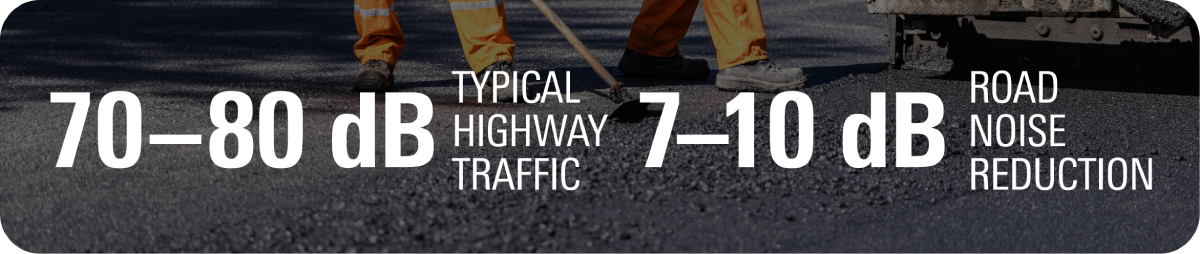
A study from the World Road Association reported that the use of asphalt pavement compared to other paved surfaces could reduce road noise by 7-10 decibels (dB). This may not seem like a lot, but even three or four decibels can make a big difference in how loud a noise may sound.
Normal conversation typically sits at about 60 decibels. Raising your voice may increase the conversation’s volume by only six or seven decibels, but it sounds significantly louder. Small changes in decibel levels have a big impact on how we perceive sound.
A noise reduction of only three decibels can sound like you’ve doubled your distance from the road. That means if your home sits 20 feet from a road, a noise reduction of three decibels can make it seem like you’re 40 to 50 feet away.
How Different Asphalt Mixes Affect Road Noise
The type of asphalt mix you choose to pave with can also affect road noise. Open-graded asphalt mixes tend to absorb more noise than dense-graded mixes and have the potential to provide an additional noise reduction of two or three decibels.
Permeable friction course (PFC) pavements, like those used on portions of the Sam Houston Tollway in the Houston area, also significantly reduce road noise while improving safety by reducing vehicle-generated splash and spray when it rains.
Not only does asphalt pavement reduce road noise more effectively compared to other materials, but it also helps create a smoother, more enjoyable ride.
Asphalt Benefits on Ride Quality
Asphalt pavement’s continuous surface minimizes the repetitive bumps and noise caused by transverse and longitudinal joints common in jointed concrete pavements. While continuously reinforced concrete performs better than jointed concrete, asphalt generally delivers a better ride experience over time.
Smoother roads also significantly improve safety. A smoother surface provides more consistent tire contact, which improves friction, and, in turn, braking and turning performance. Roads paved with asphalt can also reduce long-term maintenance costs for both vehicles and roadways. Driving over bumps and joints on a concrete road every 20 feet increases wear and tear on your suspension system and may even cause wheel alignment issues.
Although TXAPA focuses on local agencies, it’s worth noting that TxDOT’s ride quality specifications also reflect the expectation that asphalt pavement outperforms other materials.
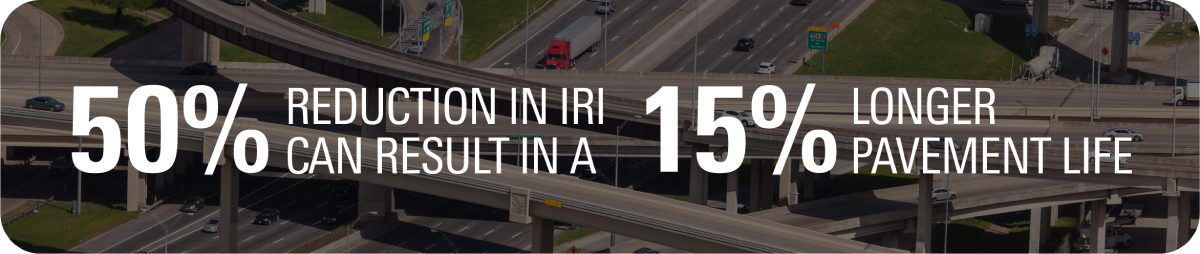
For example, TxDOT specs often set even-money smoothness for asphalt at an International Roughness Index (IRI) of 65, compared to concrete’s IRI of 85. The expectation is that, with asphalt pavement, we can get a ride that’s 20 points better than one on concrete.
To recap, opting for asphalt pavement over other materials can provide:
- Significant safety benefits
- Lower maintenance costs
- Reduced vehicle wear
- Improved driver comfort
- Longer pavement life
- And more
For more asphalt pavement industry insights, subscribe to our YouTube channel and tune into our newest podcast, Road Maps With Sam and Larry.